
Pioneering Precision From Above with Cutting -Edge Lidar Technology
Unleashing LiDAR's visionary power, illuminating a future of enhanced perception and boundless possibilities.
Estimates, Mapping, and Visualizations
Lidar solutions are advanced sensing technologies that employ laser beams to measure distances and create detailed 3D maps of an environment. By precisely detecting and analyzing the reflected light, lidar systems enable accurate object recognition, navigation, and mapping applications across various industries, from autonomous vehicles to urban planning.
3D Environment Maps
3D mapping with lidar utilizes laser-based technology to capture detailed spatial information and create high-resolution digital representations of physical environments for various applications, such as urban planning, asset management, and virtual reality.
Measure Distance
Lidar technology accurately measures distances by emitting laser pulses and precisely measuring the time it takes for the light to reflect back, enabling precise and real-time distance calculations in a wide range of applications.
City Planning
Lidar technology revolutionizes city planning by providing highly detailed and comprehensive data on terrain, buildings, and infrastructure, enabling urban planners to make informed decisions, optimize resources, and design sustainable and efficient cities.


Applications for Lidar Solutions

Forestry
Lidar solutions for forestry offer precise and detailed measurements of forest structure and vegetation, aiding in effective forest management and conservation efforts. Applications for Lidar Solutions in Forestry:
Forest inventory and monitoring: Lidar enables accurate estimation of tree heights, canopy density, and biomass, facilitating forest inventory assessments and monitoring changes over time.
Forest health assessment: Lidar data can identify disease outbreaks, detect insect infestations, and evaluate the overall health of forests by analyzing changes in vegetation structure and density.
Habitat mapping and wildlife management: Lidar-derived information on vegetation structure helps identify and map habitat features, aiding in wildlife management and conservation planning by assessing species diversity and habitat suitability.

Surveying and Mapping
At Leading Edge Lidar Solutions, we use surveying to provide highly accurate and detailed geospatial data, revolutionizing traditional surveying methods and enabling efficient and precise mapping and measurements.
Topographic mapping: Lidar can quickly and accurately capture elevation data, producing high-resolution digital elevation models (DEMs) and terrain maps for surveyors to assess land features and contours.
Infrastructure planning and design: Lidar surveys aid in the planning, design, and maintenance of infrastructure projects by capturing precise measurements of existing structures, such as roads, bridges, and buildings, facilitating accurate design and construction processes.
Flood modeling and risk assessment: Lidar-derived elevation data helps assess flood risks by creating detailed floodplain maps, analyzing water flow patterns, and identifying vulnerable areas, enabling better flood modeling and effective emergency planning.

Environmental
Lidar solutions for environmental use provide valuable insights into natural ecosystems and environmental processes, aiding in ecological research, conservation efforts, and environmental monitoring.
Vegetation monitoring and biodiversity assessment: Lidar data enables the mapping and characterization of vegetation types, canopy structure, and biodiversity patterns, supporting conservation initiatives, habitat monitoring, and ecological research.
Coastal and wetland management: Lidar surveys assist in assessing coastal erosion, monitoring wetland ecosystems, and mapping shoreline changes, contributing to effective coastal zone management, flood modeling, and restoration efforts.
Climate change analysis: Lidar technology helps monitor changes in landscape features, such as glaciers, ice sheets, and forests, providing critical data for studying climate change impacts, carbon storage estimation, and tracking ecosystem responses over time.

Research
Lidar solutions for research use offer powerful tools for scientific investigations, enabling precise and detailed data collection for a wide range of research applications.
Atmospheric research: Lidar systems provide valuable data on atmospheric properties, including aerosol distribution, cloud formation, and air quality, supporting research on climate change, weather patterns, and atmospheric dynamics.
Archaeological exploration: Lidar technology aids in uncovering hidden archaeological features and landscapes by creating high-resolution topographic maps and detecting subtle variations in terrain, assisting in site identification and analysis.
Forest ecology and dynamics: Lidar technology aids researchers in studying forest ecology by providing detailed information on tree structure, biomass estimation, and forest canopy dynamics, enabling investigations into ecosystem health, carbon sequestration, and biodiversity patterns.

Telecommunications
Lidar solutions for telecommunications offer innovative solutions for network planning, optimization, and maintenance, revolutionizing the efficiency and performance of communication infrastructure.
Line-of-sight analysis: Lidar enables accurate assessment of terrain, buildings, and vegetation to determine optimal tower placement and line-of-sight analysis for improved wireless network coverage and signal propagation.
Infrastructure monitoring and maintenance: Lidar surveys assist in monitoring the condition and structural integrity of communication towers and antennas, enabling proactive maintenance and reducing downtime for telecommunications networks.
Fiber optic network planning: Lidar-derived elevation data aids in planning and designing fiber optic routes by assessing terrain variations, identifying potential obstacles, and optimizing the placement of underground and aerial cables, ensuring efficient and reliable telecommunications connectivity.

Archaeology
Lidar solutions for archaeology provide invaluable tools for non-invasive exploration and documentation of archaeological sites, enhancing our understanding of past civilizations and cultural heritage.
Site discovery and mapping: Lidar technology enables the identification and mapping of archaeological features, such as ancient structures, ruins, and hidden landscapes, aiding in the discovery and documentation of previously unknown sites.
Landscape analysis and reconstruction: Lidar data assists in reconstructing past landscapes and understanding how ancient civilizations interacted with their environments, uncovering patterns of settlement, land use, and cultural practices.
Visualization and preservation: Lidar-derived 3D models and visualizations offer immersive experiences and virtual reconstructions of archaeological sites, enhancing public engagement, education, and the long-term preservation of cultural heritage.

Professional Surveyors
Lidar solutions for professional surveyors offer advanced technologies for accurate and efficient data collection, revolutionizing surveying practices.
Topographic mapping and terrain analysis: Lidar enables surveyors to capture highly detailed elevation data, creating precise topographic maps and facilitating terrain analysis for infrastructure planning, land development, and environmental assessments.
Construction site monitoring and progress tracking: Lidar surveys provide regular and accurate updates on construction sites, allowing surveyors to monitor progress, verify compliance with design specifications, and detect potential issues early on.
Infrastructure asset management: Lidar data aids in assessing and managing infrastructure assets, such as roads, bridges, and pipelines, by capturing comprehensive 3D information, identifying structural changes, and facilitating asset maintenance and inspection activities.

Building Modeling
Lidar solutions for building modeling offer precise and detailed data capture capabilities, enabling accurate and realistic representations of building structures and environments.
Applications for Building Modeling using Lidar:
Architectural design and renovation: Lidar data facilitates the creation of accurate 3D models for architectural design, renovations, and remodeling projects, providing architects and designers with precise measurements and spatial information.
Facilities management and space planning: Lidar-derived models assist in facilities management by capturing detailed information about building interiors, enabling efficient space planning, asset management, and occupancy analysis.
Energy efficiency and sustainability analysis: Lidar data aids in evaluating building energy performance, identifying potential areas for energy optimization, and supporting sustainability assessments, contributing to more efficient and eco-friendly building designs and operations.

Professional Engineers
Lidar solutions for professional engineers offer advanced capabilities for accurate and precise data acquisition, enabling engineers to enhance their analysis, design, and decision-making processes.
Infrastructure assessment and monitoring: Lidar surveys provide engineers with detailed information on infrastructure assets, including bridges, roads, and pipelines, facilitating condition assessment, structural monitoring, and maintenance planning.
Civil engineering and construction projects: Lidar data supports engineers in site analysis, earthwork calculations, and construction progress monitoring, improving efficiency, reducing errors, and ensuring project adherence to design specifications.
Environmental and natural resource management: Lidar technology aids engineers in assessing and managing environmental resources, such as forests, water bodies, and coastal areas, enabling analysis of terrain, vegetation, and hydrological features for better resource planning and sustainable development.

Photography and Other Florida Drone Services
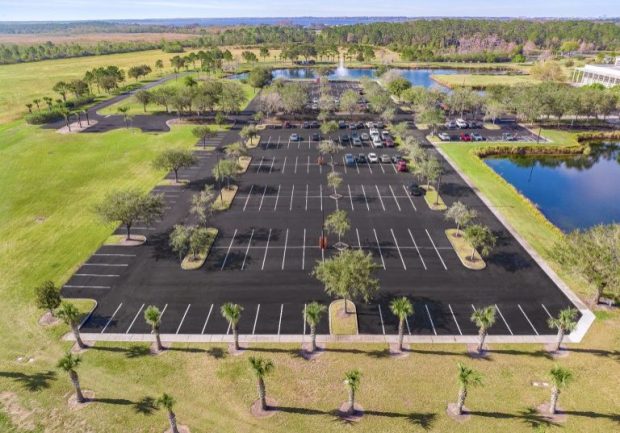
Allow our drones to capture your ideal aerial scenery, whether it be a location, landscape, or marketing. Our professionally edited photographs/videos are the perfect way to enhance your vision and share it with the public.
Our photography packages are perfect for:
-
Marketing your business
-
Commercial use for business locations
-
Landscape, beach, or ocean aerial photography


Lidar Solution Experts
1
Initial Consultation
We'll set up a call or meeting to discuss your project and come up with a plan.
2

Schedule Your Shoot
After agreeing on details, a consultant will be at your location to capture your setting.
3
Content Delivery
You'll receive your fully edited images and videos promptly following the shoot.
Leading Edge Lidar Solutions incorporate cutting-edge technologies and innovations to deliver highly accurate, reliable, and versatile 3D sensing capabilities for various industries and applications. At our company, we excel in providing lidar solutions for our clients due to several key factors. Firstly, we have a team of experienced engineers and researchers who continuously push the boundaries of lidar technology, ensuring our solutions stay at the forefront of the industry. Secondly, our lidar systems are meticulously designed and rigorously tested to meet the highest quality standards, ensuring exceptional performance and reliability in diverse environments.
Additionally, we offer customizable lidar solutions that can be tailored to specific client needs, allowing for seamless integration into existing workflows and applications. Moreover, our company places a strong emphasis on customer satisfaction, providing comprehensive technical support, training, and post-sales services to ensure our clients achieve optimal results with our lidar solutions. Lastly, we are committed to driving the widespread adoption of lidar technology, collaborating with industry partners, and actively participating in research and development initiatives to further advance the capabilities and applications of lidar solutions.